
Lecture 13 - Distribution
The Distribution System
- Characterized by a variety of segments and diverse practitioners
- Begins with supply companies providing farm inputs, such as seeds, pesticides and their farmer customers
- Highly complex
- Fragmented system - many pathways and channels
Distribution Channels
- Not obviously apparent
- Fundamentally shapes our food system; includes
- Ability of farmers
- Food companies
- How food is produced
- The types of foods available to consumers
- Even what we eat
- Prices
Food Brokers
- A food broker is an independent sales agent that works in negotiating sales between manufacturers and retailers
- If a customer has a complaint about your product then you don’t have to deal with it directly, instead they will deal with your food broker.
Types
- Concept
- Frozen
- Healthy, Organic
- International
Food Wholesalers
- Wholesale firms from manufacturers; sell them to retail establishments
- Buy, resell food
- Assemble for distribution
- Load for transport
- Delivery to customers
They are classified according to the products they carry
- Specialty (produce & dairy)
- Misc. (soft drinks, baked goods)
- General line (dry groceries)
Retail Food Stores
3 Channels
- Traditional / conventional: lost considerable market share
- Nontraditional: supercenters, supermarkets, drugstores, wholesale clubs
- Convenience stores
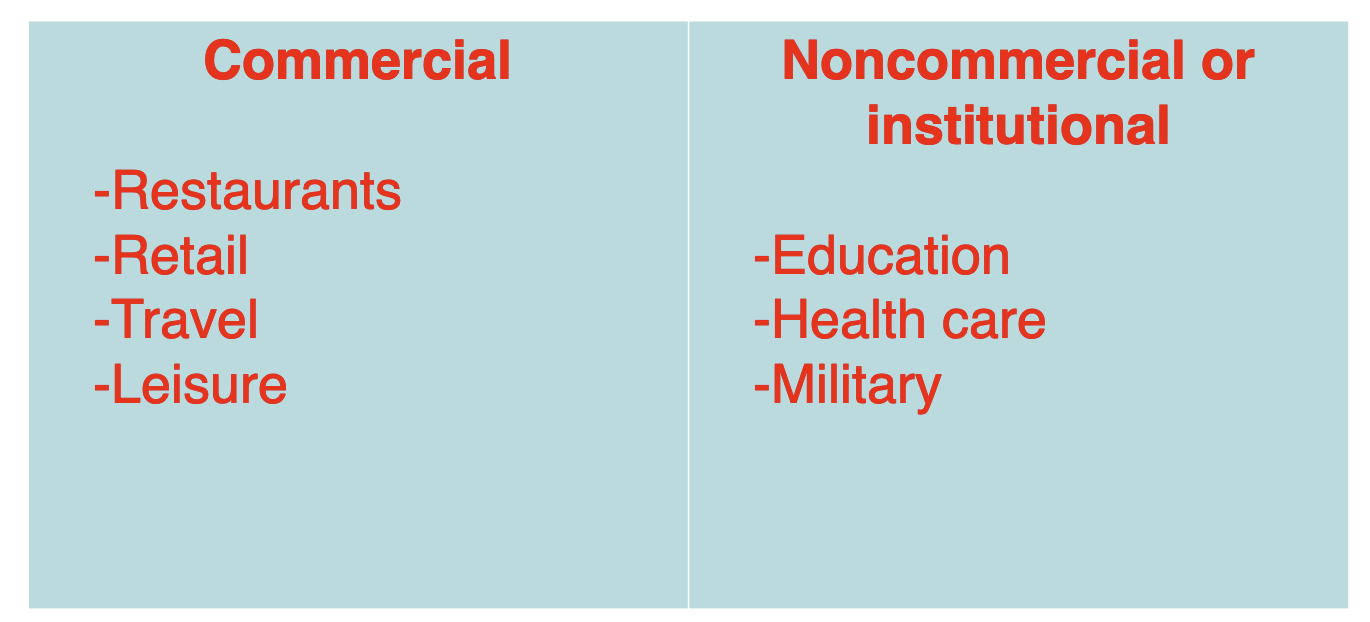
Food Service Outlets
Walmart: A Case Study
- One of history’s greatest logistical and operational triumphs
- They have arguably the most remarkable development in food distribution system, due to their emergence as a food retailer
- They impact the entire distribution system
- In 1988, Walmart entered food business with foot retailing format
- Supercenter for one-stop shopping
- Very disciplined operating practices
- Very aggressive investments in supply chain efficiencies
Cross docking: Inventory tactic
- Cross docking is a logistics practice that is the centerpiece of Walmart’s strategy to replenish inventory effectively
- The direct transfer of products from inbound or outbound truck trailers without extra storage, by unloading items from an incoming semi-trailer truck or railroad car and loading these materials directly into outbound trucks, trailers, or rail cars (and vice versa), with no storage in between
Local food
Produced within a specific geographic boundary, such as 100-400 miles Regional food system is a local food system
Advantages
- Preserve local landscapes
- Preserve family farms
- Strengthen local, regional economies
- Build relationships with farmers, neighbors
- Reduce environmental impacts
- Provide fresher food products
- Increase variety
- Reduce prices
- Farmers obtain more gross revenue
Disadvantages
- Destined to remain as only a small portion of food supply chain
- Greater system-wide energy use
- Less efficient fuel usage
- More costly delivery of products
- Seasonality limits year round availability
- Frequently lacks public and private infrastructure for orderly and coordinated food distribution
Intermediaries
Why don’t all food manufacturers sell their products directly to consumers?
Intermediaries sort food products, which adds value because of the inherent discrepancy between the narrow range of products made by suppliers and vast assortment of products demanded by consumers
Wholesalers combine foods from different sources to supply a supermarket’s produce department
Regulatory Agencies
FSIS of USDA
Ensures nation’s safe supply of meat, poultry, egg products
CFSAN, a branch of FDA
Regulates and conducts research with foods
CDC
Deals with tracking and investigations of foodborne illnesses
FDA
Among other activities, ensures the safety of our nation’s food supply, cosmetics, and products that emit radiation
EPA
Environmental Protection Agency, whose mission is to protect human health and the environment