
Processing of Cereals, Grains
Milling
- Wheat, rice, corn, oats: commonly processed cereal grains
- De-hulled, ground into smaller pieces or flours
- To improve palatability
- Reduce cooking time
- Create food products
Removes outer hull which contains tough, fibrous material. Grains are revealed; can be toasted, soaked, or cooked to soften and release starch and carbohydrates.
Commodity crops
- Corn and soybeans: increasing demand as both animal and human foods; profitable in price
- Rice: relatively stable production last 20 years; not a dietary staple in the US
- Wheat: spike in prices
But what are commodity crops?
-
Wheat, Corn, Rice, Oats, Cotton, soybeans
- Can be easily traded
- Stored for a long time
- Grown in large quantities
-
Example, when you think of cotton you don’t ask where it’s grown or what year it was harvested - it’s just “cotton”. That’s what a commodity crop is
Storage and Distribution
- Commodity crops; long shelf life when kept cool and dry
- At 70F: dried grains, beans last over 10 years
- Minimum energy needed to store products
- Since perishability is not an issue, slow, cheap, transportation methods are used
Wheat kernel or seed:
- Endosperm: 83% of the grain; typically used in refined bread flower
- Bran: Rich in fiber, vitamins & minerals
- Germ: vitamins, minerals, fat, protein
Steps in Wheat Milling
- Olden days millstones replaced today with rollers
- Separate the bran, germ, and endosperm layers
- Endosperm layer - starch or flour
- Separate the bran, germ, and endosperm layers
- Final milling by-product is wheat shorts
- Consist of bran, germ, flour and tailings
- Used to be for cattle feed only
- Consist of bran, germ, flour and tailings
- Now, the bran, germ marketed as “Viable health food”
Fatty acids in germ contribute to off-flavors and rancidity, it is removed; storage time of white flour improved when compared to wheat flour
Bleaching and maturing of flour
-
*Final stage in the production of white flour
-
FDA approved use of agents
- Nitrogen trichloride, nitrogen tetroxide, chlorine dioxied, benzyl peroxide, acetone peroxides, azodicarbonamide
-
WHY?
- Fresh milled, unbleached flour - yellowish due to natral pigments in wheat
- Fresh milled flour - yields small, coarse-textured loaf
-
Solution: store the flour for several months to lighten color, improve baking qualities
-
FDA approved agents - similar effects in short period of time
-
Commerically made white bread, made from bleached flour, was considered a modern food and was more expensive than whole wheat bread
-
White bread was favored; a status symbol
-
1920s: wonder bread - with 12 vitamins, minerals - heavily advertised as healthy food for children
-
Today, whole wheat bread is more expensive than white bread; changing dynamics of food technology, nutrition and science on food choices
Bread production
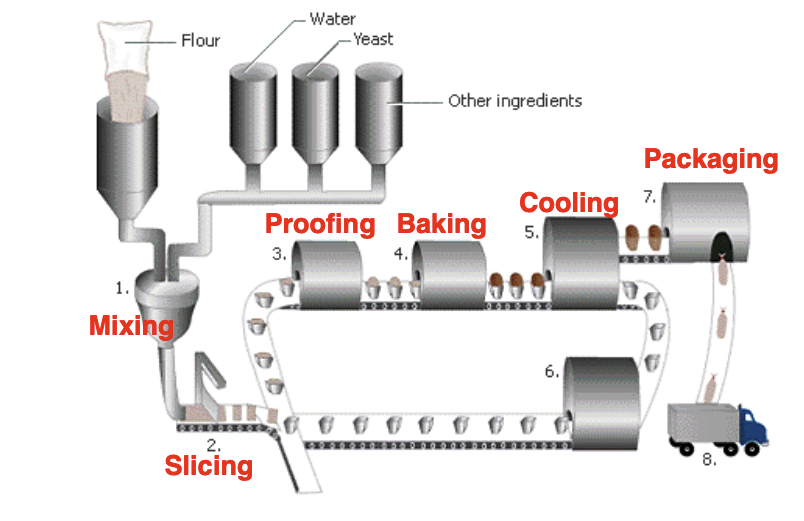
- Ingredient mixing and dough development
- Automatic dough slicing and depositing into bread pans/trays
- Proofing / second rise
- Baking the loaves in hot-air convection oven
- Cooling the bread, separating the loaves from the bread pans
- Slicing and packaging
- Delivery to retail outlets
Products from corn
- Sweeteners: glucose, dextrose, corn syrup, high fructose corn syrup
- Oils, feed, meal, fiber foods
- Modified corn starch: thickeners in foods
- Ethanol: fuel and beverage alcohol
Dry milling corn
- The dry milling process requires the miller to remove the corn hull and germ without reducing the endosperm
- This process produces flaking grits, meals, flours, oil
- Breakfast cereal is produced from large flaking grits
Rice
-
Has traveled from China to India/Pakistan to Africa to Middle East, to Europe, finally arriving in South Carolina
-
Labor-intensive crop; utilized slave labor
-
Rice is typically consumed in kernel form
-
Outside rice hull - inedible; used for fuel or mulch
-
Brown rice: rice with outer bran layer
-
White rice: bran removed
-
**One of the most protected global agricultural commodities
Broken rice
- During milling, rice often breaks - broken rice
- Not as valuable as unbroken rice; used by processors, cereal manufacturers and pet food manufacturers
Soybeans
-
The two major products from soybean processing are high-protein meal and oil.
-
Food uses of oil include shortening, margarine, and cooking and salad oils; nonfood uses include paint, varnish, resins, and plastics
-
Soybean meal, which is the largest product produced from this process, is used by the feed industry as a protein supplement.
-
Bean family; primarily used for:
- Livestock feed
- Vegetable oil (80% of oil consumed in US)
Once beans reach the processors
- Processed directly into products made from whole soybeans - soymilk, flour, tofu
- Further refining: clean, dry, crack the hull form soybean
- Hulls go for animal feed
- Remaining portion converted into animal food flakes and soy flour
- Flakes: used to extract soybean oil and lecithin
- Lecithin: widely used emulsifier in salad dressings, mayonnaise, ice cream…
Oats
Steel Cut Oats
- Whole grains is cut into several pieces
- Longest to cook
- Toothsome, chewy texture
Rolled oats
- Whole grains first steamed then pressed to flatten them
- Cook faster than steel-cut oats
Instant Oats
- Most processed
- Whole grains pre-cooked, dried, and then rolled and pressed thinner
- Cook more quickly